Open Today Sales: 9 AM-8 PMOpen Today Service: 7 AM-7 PM
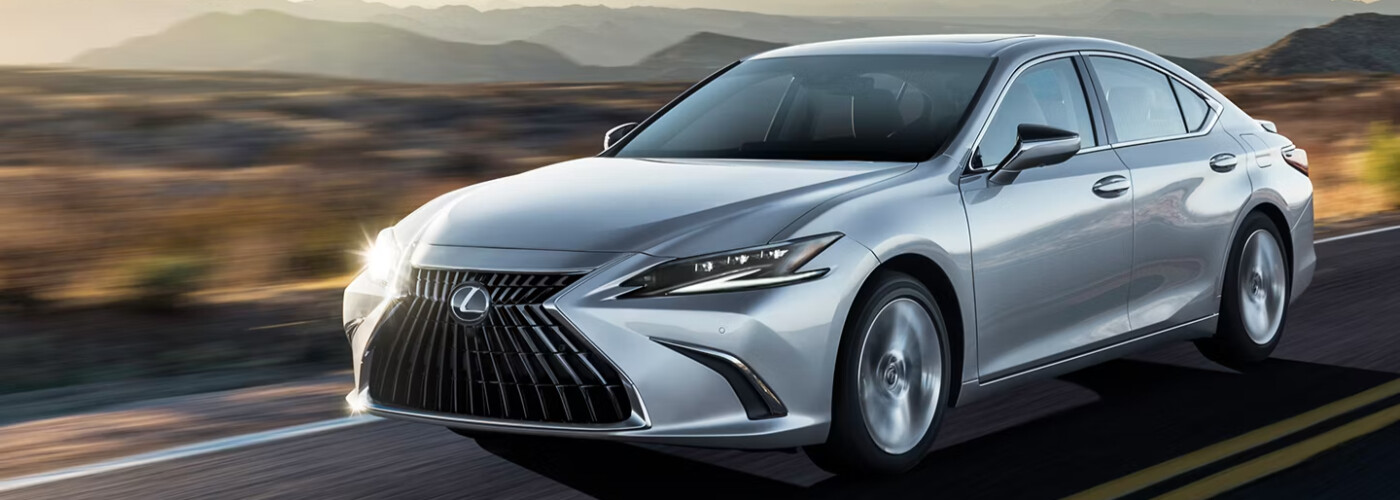
The right engine oil is one of the simplest ways to protect your Lexus ES — but the correct viscosity and capacity are not the same across every model year. Over the 2013–2026 range, the ES has used two different V6 engines, two different hybrid systems, a four-cylinder ES 250, and, for 2026, an all-new hybrid alongside two fully electric models. This guide breaks the specifications down by engine so you can find the exact oil type and capacity for your ES, whether you service it yourself or bring it to our team.
Oil capacity varies by engine, not by trim level, and viscosity has shifted as Lexus introduced lower-friction engines built for better fuel economy. The table below is organized by engine family so you can match your ES quickly. All capacities are for a standard drain-and-refill with a new oil filter, and every current ES engine requires full synthetic oil — never conventional.
| Engine | Model | Model Years | Oil Viscosity | Capacity (with filter) |
|---|---|---|---|---|
| 3.5L V6 (2GR-FE) | ES 350 | 2013–2018 | SAE 0W-20 full synthetic | 6.4 quarts |
| 3.5L V6 (2GR-FKS) | ES 350 | 2019–2025 | SAE 0W-20 full synthetic | 5.7 quarts |
| 2.5L Hybrid (2AR-FXE) | ES 300h | 2013–2018 | SAE 0W-20 full synthetic | Approx. 4.6 quarts |
| 2.5L Hybrid (A25A-FXS) | ES 300h | 2019–2025 | SAE 0W-16 full synthetic | 4.8 quarts |
| 2.5L 4-Cylinder (A25A-FKS) | ES 250 | 2021–2025 | SAE 0W-16 full synthetic | 4.8 quarts |
| 2.5L Hybrid (sixth-generation system) | ES 350h | 2026 | SAE 0W-16 full synthetic (confirm with owner’s manual) | See owner’s manual — spec pending |
| Battery-Electric | ES 350e / ES 500e | 2026 | — No engine oil — | N/A (fully electric) |
A few takeaways worth noting: the V6 ES 350 switched from the 2GR-FE to the 2GR-FKS engine for the 2019 redesign, which lowered its filter-change capacity from 6.4 to 5.7 quarts even though both use 0W-20. On the hybrid side, the earlier ES 300h used 0W-20, while the 2019-and-newer ES 300h moved to thinner 0W-16 to support its efficiency targets. If 0W-16 is ever unavailable, Lexus allows 0W-20 as a temporary substitute — but the correct grade should be restored at the next service.
The 2026 ES is a fully redesigned eighth generation, and it changes the oil conversation entirely. There is no longer a V6 in the lineup. Instead, the ES is offered as a hybrid and as two battery-electric models:
If you drive a 2026 ES 350h and want the precise, manual-confirmed oil specification for your VIN, our service advisors can pull it for you directly.
Modern Lexus ES engines are engineered with tight internal tolerances and low-friction surfaces designed around thin, low-viscosity oil. The viscosity is not interchangeable on a whim:
When in doubt, the owner’s manual and the dipstick are the final authorities: the capacities listed here are reference quantities, and the correct fill level is always confirmed on the dipstick after the engine has run and settled.
This information is provided for general educational purposes only and does not constitute legal advice. Warranty coverage depends on the specific terms of your vehicle’s warranty agreement. Consult your owner’s manual or a qualified legal professional for guidance on your individual situation.
EPA-estimated fuel economy figures are for comparison purposes only. Your actual mileage will vary depending on driving conditions, how you drive and maintain your vehicle, battery age/condition, and other factors.
For ES models running full synthetic oil, Lexus specifies the following intervals. Note that many everyday driving patterns actually qualify as “special operating conditions,” which shorten the interval.
| Driving Condition | Oil & Filter Change Interval |
|---|---|
| Normal (full synthetic) | Every 10,000 miles or 12 months, whichever comes first |
| Special / severe operating conditions | Every 5,000 miles or 6 months, whichever comes first |
Lexus defines several everyday patterns as special operating conditions that call for the shorter interval:
If several of these describe your routine, the 5,000-mile / 6-month interval is the safer choice. Our advisors can help you decide which schedule fits how you actually drive.
The oil types, capacities, and change intervals on this page are provided as general reference based on Lexus owner’s manuals and manufacturer-published specifications for North American Lexus ES models. Specifications can vary by model year, drivetrain, and production date, and figures for the newest model year are subject to confirmation against the current owner’s manual. Always verify the correct oil viscosity, capacity, and change interval for your specific vehicle in your owner’s manual or with our service team before servicing.
You can schedule service online and our factory-trained technicians will use the correct genuine oil and filter for your specific ES. Be sure to check our current service specials before your visit, and you can learn more about our Lexus service department at Lexus of Woodland Hills.
Lexus allows 0W-20 as a temporary substitute if 0W-16 is not available, but you should return to 0W-16 at the next oil change. The thinner 0W-16 is specified for the newer four-cylinder engines to reduce internal friction and support fuel economy, so it is the preferred grade for everyday use.
The current Lexus ES engines require full synthetic oil. Conventional oil breaks down faster and can lead to sludge in these tight-tolerance engines, and using it may affect performance and warranty coverage.
No. The 2026 ES 350e and ES 500e are fully battery-electric and have no combustion engine, so they require no engine oil. Their maintenance focuses on tires, brakes, cabin filters, and cooling systems rather than oil changes.
A fresh oil filter keeps unfiltered oil from circulating and maintains proper flow and pressure. The drain plug gasket is a single-use crush washer that deforms to create a seal when torqued, so reusing it risks slow leaks. Both are replaced at every oil and filter change.
General Information / Warranty: This information is provided for general educational purposes only and does not constitute legal advice. Warranty coverage depends on the specific terms of your vehicle’s warranty agreement. Consult your owner’s manual or a qualified legal professional for guidance on your individual situation.
EPA-Estimated Fuel Economy: EPA-estimated fuel economy figures are for comparison purposes only. Your actual mileage will vary depending on driving conditions, how you drive and maintain your vehicle, battery age/condition, and other factors.
Specifications & Service Intervals: The oil types, capacities, and change intervals on this page are provided as general reference based on Lexus owner’s manuals and manufacturer-published specifications for North American Lexus ES models. Specifications can vary by model year, drivetrain, and production date, and figures for the newest model year are subject to confirmation against the current owner’s manual. Always verify the correct oil viscosity, capacity, and change interval for your specific vehicle in your owner’s manual or with our service team before servicing.