Open Today Sales: 9 AM-8 PMOpen Today Service: 7 AM-7 PM
Keeping a Lexus performing the way it did the day you drove it home comes down to one habit: following the factory maintenance schedule. Lexus is built around a simple, predictable service rhythm, and staying on top of it protects your safety, your fuel economy, and your vehicle’s long-term value. This guide walks through what your Lexus needs and when — from the first complimentary visit to the major milestones down the road.
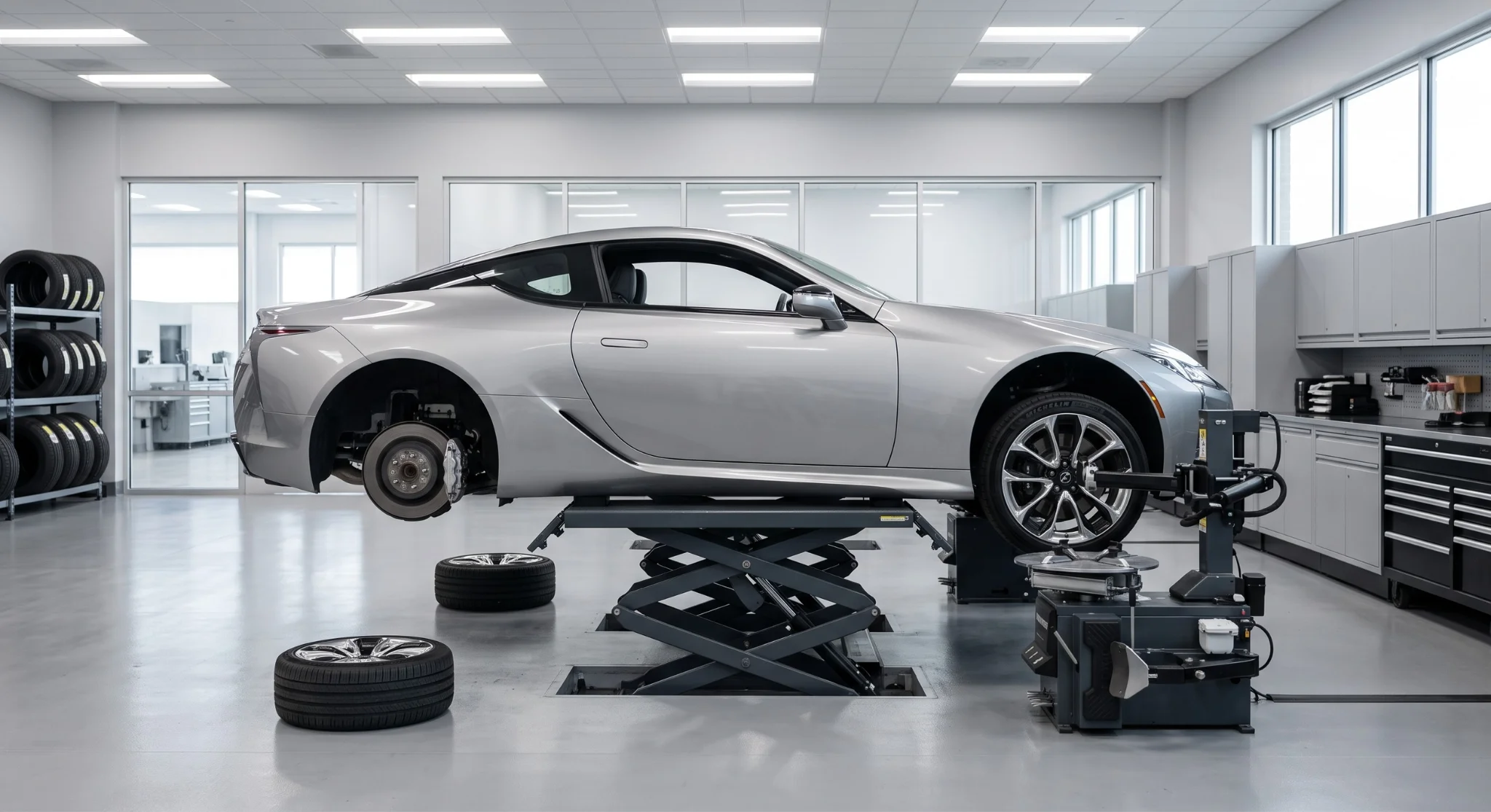
At the heart of the schedule is a single recurring interval: Lexus recommends a service visit every 5,000 miles or six months, whichever comes first. Some visits are quick inspection-and-rotation stops; others are major milestones with filter and fluid replacement. Below is how the schedule breaks down.
| Interval | What’s Typically Performed |
|---|---|
| 5,000 mi / 6 mo | Tire rotation, tire-pressure adjustment, multi-point inspection, fluid top-off, maintenance-reminder reset |
| 10,000 mi / 12 mo | Engine oil & filter change (synthetic-oil models), tire rotation, multi-point inspection |
| 15,000 mi / 18 mo | Oil & filter change, tire rotation, broader inspection of brakes, steering, and key components |
| 30,000 mi / 36 mo | Replace engine & cabin air filters, brake-fluid replacement, full inspection |
| 60,000 mi / 72 mo | Transmission-fluid service, suspension and brake-component inspection, longer-interval items per owner’s manual |
| 90,000 mi / 108 mo | Cooling-system inspection, drive belts & hoses checked, full fluid assessment |
Most newer Lexus models using synthetic oil have their oil and filter changed every 10,000 miles or 12 months, while the in-between 5,000-mile visits focus on tire rotation, fluid top-offs, and safety inspections. Vehicles using non-synthetic oil follow a 5,000-mile oil-change interval — check your Warranty and Services Guide for your model. For a model-specific breakdown, see our RX maintenance schedule.
When that maintenance reminder first appears on your dashboard — usually around 5,000 miles — it’s a signal for your initial foundational service. Lexus complimentary maintenance covers the first two scheduled visits after you purchase a new Lexus: at 6 months/5,000 miles and again at 12 months/10,000 miles. These visits include a tire rotation, a multi-point inspection, a fluid-level check and top-off, and a reset of the maintenance reminder system. Technicians also confirm the driver’s floor mat is properly secured to prevent pedal interference.
The multi-point inspection is a health check that catches early wear you wouldn’t notice on a daily drive. Technicians visually inspect the brake pads, calipers, and rotors, verify key components, and road-test the vehicle to confirm everything is working as it should. Catching small issues early is a big part of why Lexus has such a strong reliability reputation. Not sure what that dashboard alert means? Learn what the Lexus Maintenance Required light is telling you.
The contact between your tires and the road is the single biggest factor in how your Lexus handles and stops. Lexus brake pads typically last between 30,000 and 70,000 miles — a wide range, because real-world brake life depends heavily on how and where you drive. Frequent stop-and-go traffic wears pads faster than steady highway miles, and front pads generally wear faster than rears since the front brakes handle the majority of stopping force.
A professional brake service is more than a pad swap. Technicians inspect the calipers, rotors, and brake lines for uneven wear and measure pad thickness so worn pads are replaced before they damage the rotors. During a tire rotation, technicians also reset tire pressures to factory specifications and check tread depth for even wear — important on any Lexus, and especially on all-wheel-drive models where uneven tread can place extra strain on the drivetrain. For more on tire care, see our guide to Lexus tire rotation and balance in Woodland Hills.
Your Lexus gives you clear warnings when its brakes need service. Watch and listen for these signs:
A built-in metal wear-indicator tab contacts the rotor when pads get thin, producing a high-pitched squeal — your brakes’ early-warning system that replacement is coming soon.
A harsh metal-on-metal sound means the pad material has worn through completely and is damaging the rotor. This is urgent — schedule service right away to avoid a costlier repair.
A pulsing in the brake pedal or steering wheel when slowing down usually points to warped rotors and should be inspected.
If the car takes longer to stop than usual or the pedal feels soft or spongy, have the braking system inspected promptly.
If you notice any of these, schedule a brake inspection rather than waiting — early attention keeps a simple pad replacement from turning into a pad-and-rotor repair.
As your Lexus accumulates miles, service shifts from simple inspections toward filter and fluid replacement. Here’s what each major milestone generally involves:
| Milestone | Focus | Key Services |
|---|---|---|
| 30,000 mi | Filters & brake fluid | Replace engine & cabin air filters, brake-fluid replacement, full multi-point inspection |
| 60,000 mi | Powertrain | Transmission-fluid service, suspension and brake-component inspection; longer-interval items such as spark plugs evaluated per owner’s manual |
| 90,000 mi | Cooling & longevity | Cooling-system inspection, drive belts & hoses checked, full fluid assessment, road test |
At 30,000 miles, technicians replace both the engine and cabin air filters and perform a brake-fluid replacement, restoring the responsive pedal feel Lexus drivers expect and maintaining clean cabin airflow. By 60,000 miles, attention turns to the powertrain. At 90,000 miles, technicians inspect the cooling system, drive belts, and hoses to guard against overheating during hot Southern California summers. Most modern Lexus engines use maintenance-free timing chains, so there’s no scheduled timing-belt replacement on current models.
Your Lexus relies on two air filters. The engine air filter keeps dust and debris out of the combustion chamber, supporting performance and efficiency, while the cabin air filter traps pollen and pollutants for cleaner air inside the vehicle. Both are typically replaced every 30,000 miles or 36 months — sooner if you frequently drive in dusty conditions or heavy traffic.
Using Genuine Lexus Parts is the surest way to guarantee replacement components meet your vehicle’s exact specifications. Unlike generic aftermarket parts, genuine components are engineered for a precise fit and are backed by the Lexus Service Parts Warranty for 12 months, regardless of mileage, from the date of installation (batteries excepted).
Many drivers ask what their coverage includes when they come in for maintenance. While the factory warranty covers defects in materials and workmanship, it generally does not cover normal wear-and-tear items such as brake pads, wiper blades, or tires. Here’s how the standard new-vehicle coverage breaks down:
| Coverage | Duration |
|---|---|
| Basic (Comprehensive) | 4 years / 50,000 miles |
| Powertrain | 6 years / 70,000 miles |
| Corrosion Perforation | 6 years / unlimited miles |
| Roadside Assistance | 4 years / unlimited miles |
| Hybrid Battery (2020 & newer) | 10 years / 150,000 miles |
For hybrid models, the hybrid battery is covered for 10 years or 150,000 miles on 2020-and-newer vehicles — meaningful long-term protection for an electrified Lexus. Keeping a documented service history at a certified dealership helps any future warranty claim go smoothly, since records are stored in the Lexus National Service History database and can be accessed by any Lexus dealer in the United States.
This information is provided for general educational purposes only and does not constitute legal advice. Warranty coverage depends on the specific terms of your vehicle’s warranty agreement. Consult your owner’s manual or a qualified legal professional for guidance on your individual situation.
The initial 6-month/5,000-mile visit includes a tire rotation, an adjustment of tire pressures, a multi-point inspection, a fluid-level check and top-off, and a reset of the maintenance reminder. Lexus complimentary maintenance covers this visit and the second scheduled service at 12 months/10,000 miles.
Most Lexus brake pads last between 30,000 and 70,000 miles, depending on driving conditions. A visual inspection of the pads, calipers, and rotors during each service interval helps catch wear early.
Most newer Lexus models using synthetic oil need an oil and filter change every 10,000 miles or 12 months. The in-between 5,000-mile visit is still important for tire rotation and safety inspections. Vehicles using non-synthetic oil follow a 5,000-mile oil-change interval.
Federal law protects your right to use independent shops, but Lexus recommends certified technicians for genuine parts and specialized diagnostic tools. Documented adherence to the factory maintenance schedule is what’s required to keep your warranty valid.
Both are typically replaced every 30,000 miles or 36 months. If you regularly drive in dusty conditions or heavy traffic, you may need to replace them sooner.
Staying on schedule is the most effective way to protect your Lexus’s performance, safety, and value. Whether you’re due for a routine tire rotation or a major-milestone service, the certified technicians at Lexus of Woodland Hills are here to help drivers across Woodland Hills, Tarzana, Encino, Reseda, Calabasas, and Canoga Park keep their vehicles running their best.
This information is provided for general educational purposes only. Maintenance intervals and warranty terms vary by model and model year; always consult your owner’s manual and Warranty and Services Guide for the specifics of your vehicle. Contact Lexus of Woodland Hills for details on your individual situation.
Most luxury SUVs put pavement manners ahead of trail readiness. The 2026 Lexus GX 550 Overtrail does not. It is built on a high-strength body-on-frame platform and engineered for demanding terrain. The cabin stays as refined as you expect from the brand. Every grade comes standard with full-time four-wheel drive and a 10-speed automatic transmission….
Elegir un SUV híbrido de tres filas casi siempre se reduce a una pregunta práctica. ¿Cómo se usará el espacio interior todos los días? Lexus TX responde con dos motorizaciones electrificadas y configuraciones de asientos que cambian según la versión. Entender la diferencia empieza por ahí. Lexus TX se ofrece con dos motorizaciones electrificadas. TX…
La decisión entre comprar y arrendar rara vez se reduce al pago mensual. Depende de cuántas millas recorre al año, cuánto tiempo piensa conservar el vehículo y qué tanto le importa manejar siempre la tecnología más reciente. Para quienes viven en Woodland Hills, Tarzana o Encino y evalúan un SUV de lujo, vale la pena…