

How Lexus Hybrids Work: The Self-Charging Advantage
A Lexus hybrid pairs a gasoline engine with one or more electric motors and a high-voltage battery, then lets an intelligent control system decide — moment to moment — which power source to use. The defining trait of a conventional Lexus hybrid is that it is self-charging: the battery replenishes itself as you drive, so you never plug it in. This is the technology Lexus pioneered in the luxury market two decades ago, and today Lexus offers one of the broadest lineups of electrified luxury vehicles available, built around a system known as Lexus Hybrid Drive.
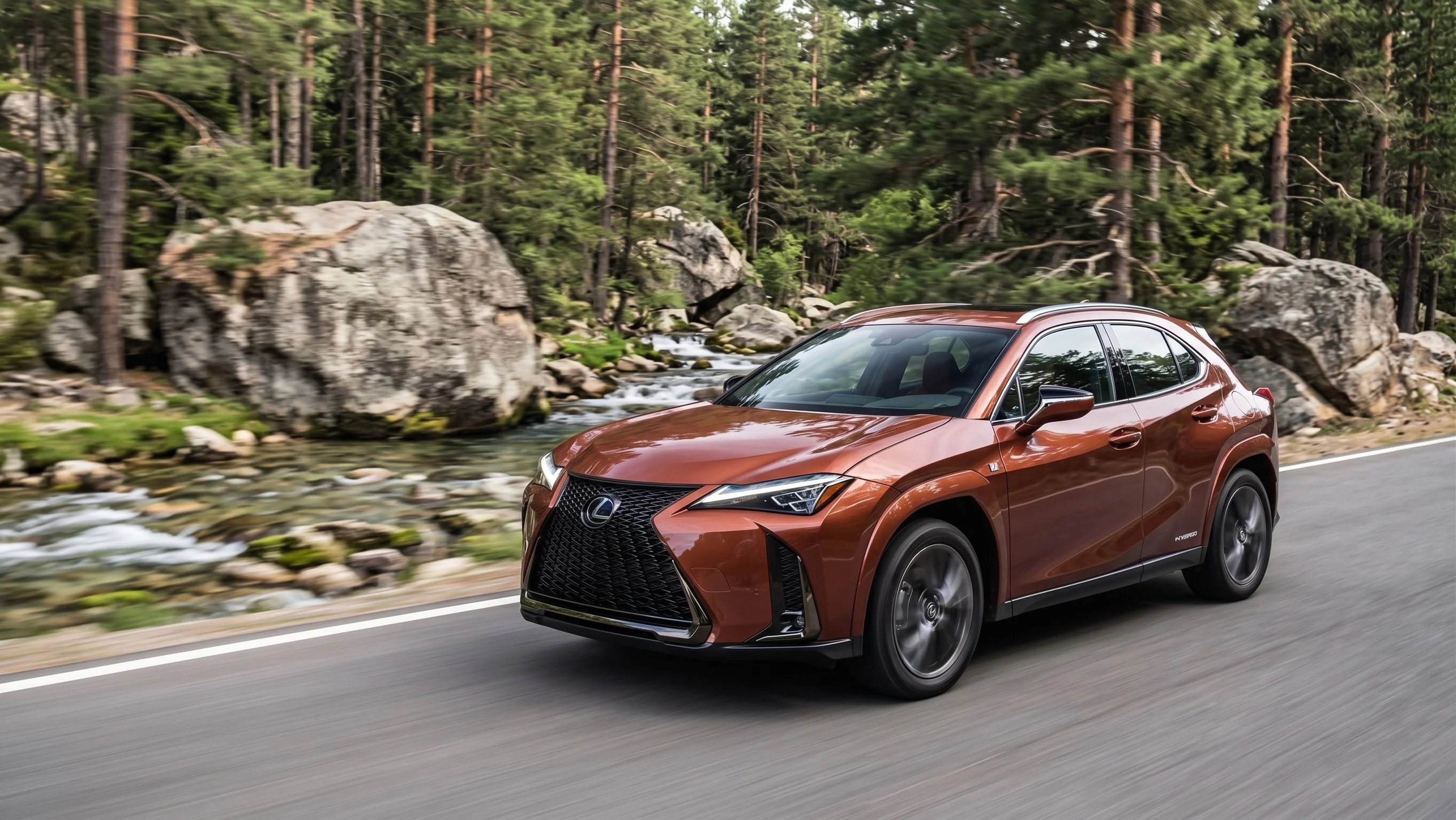
The Core Technology Behind Lexus Hybrid Drive
The Atkinson-Cycle Engine
At the core of the system is a gasoline engine tuned to run on the Atkinson cycle, a combustion process that extracts more energy from every gallon of fuel by holding the intake valves open slightly longer during compression. It is inherently more efficient than a conventional engine cycle.
The eCVT Power Split
Power is blended by a planetary gear set acting as an electronically controlled continuously variable transmission (eCVT). Rather than belts and pulleys, it uses electric motor-generators to continuously balance output between the engine and the electric drive — letting the vehicle run on electricity, gasoline, or both.
Regenerative Braking
When you lift off the accelerator or brake, the motors reverse and act as generators, capturing energy that would otherwise be lost as heat and routing it back into the battery. This is how a self-charging hybrid replenishes itself without ever plugging in.
Intelligent Power Management
An onboard hybrid computer constantly weighs battery charge, throttle input, and vehicle speed to select the most efficient power source. On a first hybrid test drive, our product specialists often point out the energy-flow display in the instrument cluster, which shows exactly when the battery is charging during deceleration.
The Three Paths of Lexus Electrification
Not every electrified Lexus works the same way. Lexus organizes its electrified lineup into three distinct types, and understanding the difference is the fastest way to find the right fit. A conventional hybrid never plugs in. A plug-in hybrid can be charged from an outlet for meaningful all-electric range, then runs as a self-charging hybrid afterward. A battery electric vehicle runs on electricity alone.
| Electrification Type | Plugs In? | Electric-Only Range | How the Battery Charges |
|---|---|---|---|
| Hybrid (HEV) — “self-charging” | No | Short, low-speed only | Regenerative braking and the gas engine, automatically |
| Plug-in Hybrid (PHEV) | Yes (optional) | Longer, then reverts to hybrid operation | Plug-in charging, plus regen and the engine |
| Battery Electric (BEV) | Yes (required) | Full electric range | Plug-in charging only |
Can a Lexus Hybrid Drive on Electric Power Alone?
Automatic Electric Operation
Yes — under the right conditions. When a conventional Lexus hybrid is starting up, reversing, or moving at low speeds, the system can shut off the gasoline engine and run on the electric motor alone. Because a self-charging hybrid uses a compact, lightweight battery rather than the large pack in a plug-in or full electric vehicle, electric-only range is meant for short distances — ideal for parking structures, creeping through heavy traffic, or leaving the neighborhood quietly early in the morning.
Driver-Selectable EV Mode
Many models also offer an EV Mode button that holds electric-only operation when there is enough charge and you accelerate gently. As speed or power demand rises, the gasoline engine restarts so smoothly it is nearly imperceptible, with the electric motor adding instant torque during acceleration.
Do Lexus Hybrids Stay Efficient on the Highway?
Efficiency at Cruising Speed
A common misconception is that hybrids lose their advantage at sustained highway speeds. In practice, Lexus hybrids hold strong fuel economy on the open road. The Atkinson-cycle engine is optimized for efficient steady-state cruising, and the eCVT keeps it in its most efficient range, avoiding the high-revving fuel spikes of a traditional automatic.
Electric Assist Under Load
The electric motor stays available at speed too, adding subtle assist when climbing grades or passing so the gasoline engine works less and uses less fuel. The result is a luxury vehicle that can deliver efficiency more often associated with far smaller cars.
EPA-estimated fuel economy figures are for comparison purposes only. Your actual mileage will vary depending on driving conditions, how you drive and maintain your vehicle, battery age/condition, and other factors.
What Sets a Lexus Hybrid Apart From a Toyota Hybrid?
Lexus and Toyota share a deep hybrid engineering heritage, but a Lexus executes it to a luxury standard. The differences show up in four areas.
A Quieter Cabin
Lexus uses added insulation, acoustic glass, and active noise cancellation for a whisper-quiet ride that isolates you from road and wind noise.
Elevated Materials
Premium seating surfaces, genuine wood trims, and hand-stitched details set the interior apart from mainstream models.
Advanced Technology
Larger high-definition touchscreens, available head-up displays, and an available premium surround-sound system tuned to each cabin’s acoustics elevate the everyday experience.
Refined Ride & Safety
Available Adaptive Variable Suspension continuously adjusts damping at each wheel, and every current Lexus arrives with the latest generation of the Lexus Safety System+ suite of driver-assist and collision-avoidance technologies.
Common Questions About Lexus Hybrid Technology
Do I need to plug in a Lexus hybrid?
Not a conventional (self-charging) Lexus hybrid — it never needs to be plugged in. The high-voltage battery recharges automatically from energy captured during braking and deceleration, and from the gasoline engine when needed. Only plug-in hybrid and battery electric models charge from an outlet.
What warranty covers a Lexus hybrid battery?
On 2020-and-newer Lexus hybrids, the hybrid battery is covered for 10 years or 150,000 miles, whichever comes first, per Lexus. Other hybrid system components, such as the control module and inverter, carry an 8-year/100,000-mile warranty.
This information is provided for general educational purposes only and does not constitute legal advice. Warranty coverage depends on the specific terms of your vehicle’s warranty agreement. Consult your owner’s manual or a qualified legal professional for guidance on your individual situation.
How does cold weather affect a Lexus hybrid’s fuel economy?
In cooler temperatures the gasoline engine may run more often to generate cabin heat, which can temporarily reduce efficiency. In the generally mild Woodland Hills climate, local owners typically see little seasonal variation.
Which type of Lexus hybrid is right for a daily commuter?
For most commuters a conventional self-charging hybrid is the simplest choice — no charging routine, strong efficiency, and no range anxiety. Drivers with a home charger who want to cover shorter trips on electricity alone may prefer a plug-in hybrid. Our team can help you compare both against how and where you actually drive.
How does a Lexus hybrid perform compared to a non-hybrid?
The electric motors deliver instantaneous torque off the line, so acceleration feels smooth and immediate — often more refined and quieter than a comparable gas-only engine, with electric assist filling in the moment you press the accelerator.
Experience Lexus Hybrid Technology at Lexus of Woodland Hills
The best way to understand a Lexus hybrid is from behind the wheel. We welcome you to visit our Woodland Hills showroom and explore the full electrified lineup in person, serving drivers from Encino, Tarzana, Reseda, Calabasas, and Canoga Park. To confirm availability or set up a time to visit, call our team at (818) 276-9964. Whether you want to feel the quiet efficiency of a compact hybrid crossover or explore a larger family SUV, we are here to make it an unhurried, luxury experience.
EPA-estimated fuel economy figures are for comparison purposes only. Your actual mileage will vary depending on driving conditions, how you drive and maintain your vehicle, battery age/condition, and other factors.
0 comment(s) so far on How Lexus Hybrids Work: The Self-Charging Advantage