

What Is a Lexus Hybrid? Self-Charging vs. Plug-In Explained
If you’re researching a Lexus hybrid, you’ve likely encountered two very different technologies wearing the same “hybrid” label: the self-charging hybrid and the plug-in hybrid (PHEV). They share a philosophy—pairing a gasoline engine with electric power for efficiency—but they store and use electricity in fundamentally different ways. Understanding that difference is the key to choosing the right electrified Lexus for how you actually drive.
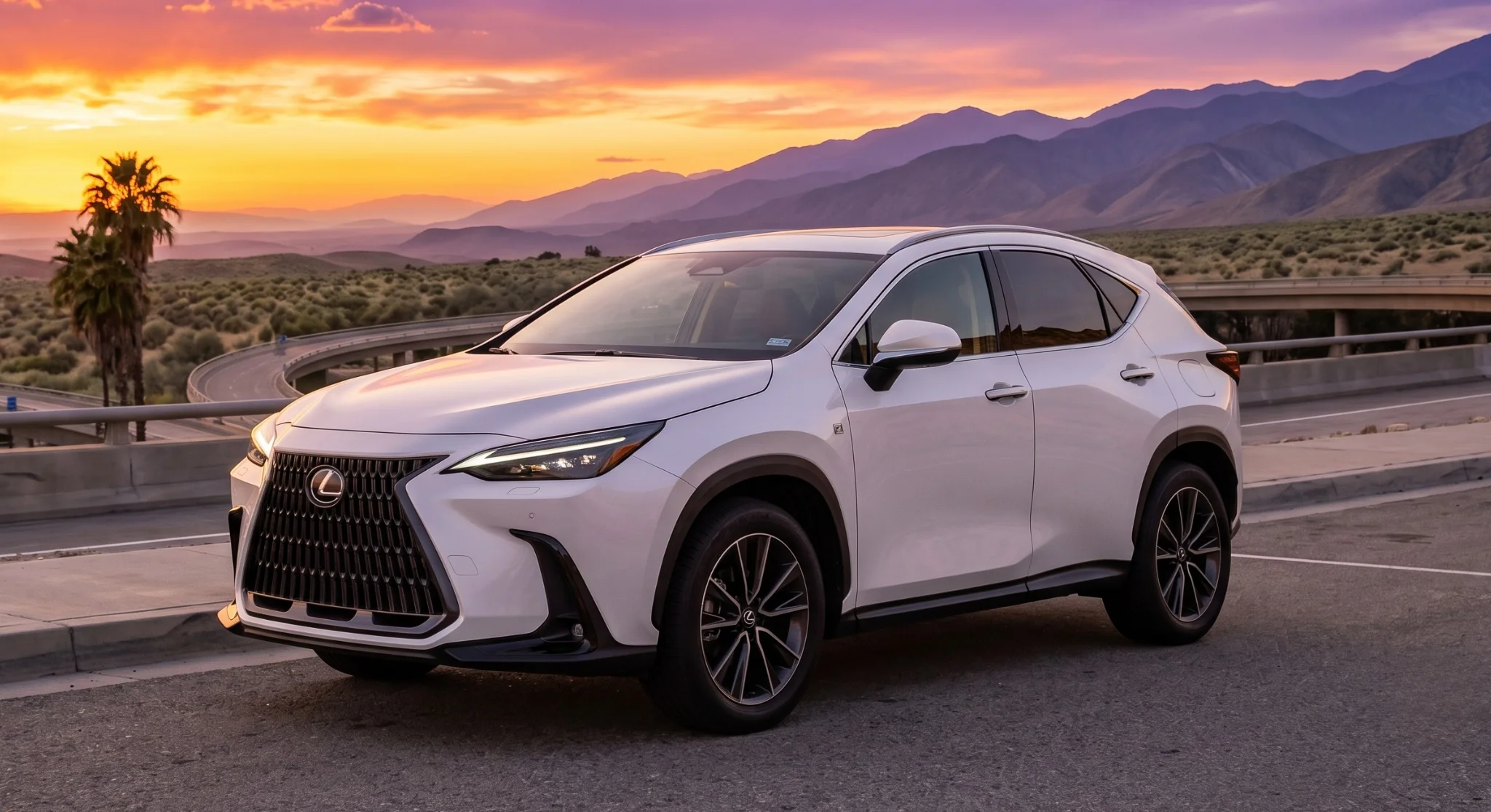
Self-Charging vs. Plug-In: The Core Difference
Two Ways to Power the Same Idea
A self-charging hybrid pairs a gasoline engine with electric motor-generators and a compact battery. It replenishes that battery on its own—through regenerative braking and surplus engine power—so it never needs to be plugged in. It runs as a highly efficient gas-electric vehicle, blending power sources automatically to stretch every gallon.
A plug-in hybrid adds a much larger lithium-ion battery and an external charging port. With a full charge, a Lexus PHEV can drive on electricity alone for typical daily errands and commutes. When the electric range runs out, it seamlessly becomes a conventional hybrid—using the same gas-plus-electric cooperation as a self-charging model.
| Attribute | Self-Charging Hybrid (HEV) | Plug-In Hybrid (PHEV) |
|---|---|---|
| Battery size | Compact | Large lithium-ion |
| Charging port | None | Yes (J1772) |
| Needs plugging in? | No | Optional — for EV range |
| Electric-only driving | Brief, low-speed assist | 37–38 mi EPA-Estimated range |
| How the battery charges | Regen braking + engine | Wall outlet + regen braking + engine |
| Example Lexus models | RX 350h, NX 350h, ES 300h, UX 300h | NX 450h+, RX 450h+ |
How the Lexus Self-Charging Hybrid System Works
Lexus Hybrid Drive on the Road
At the heart of every self-charging Lexus is Lexus Hybrid Drive, which coordinates a gasoline engine, a high-torque electric motor, and an electronically controlled continuously variable transmission (CVT). From a stop, the vehicle often moves on electric power alone for silent, instant torque. As speed builds, the gas engine joins in smoothly—or takes over entirely at highway cruise. Under braking, the electric motor reverses into a generator, capturing energy that would otherwise be lost as heat and storing it in the battery. The system manages these handoffs continuously and near-imperceptibly; the driver simply drives.
| Drive phase | What powers the wheels | What happens to the battery |
|---|---|---|
| Launch from stop | Electric motor (often) | Discharges briefly |
| Light acceleration / city | Gas + electric blend | Charges opportunistically |
| Highway cruise | Gas engine (primary) | Maintained by engine |
| Braking / deceleration | Regenerative braking | Recharges |
This proven technology runs across Lexus’s premium crossovers. You can see the electrified options currently on the ground on our hybrid and plug-in lineup page.
Understanding Lexus Plug-In Hybrid Technology and Electric Range
Electric Range Meets Gas-Hybrid Flexibility
A Lexus PHEV bridges conventional hybrid efficiency and full battery-electric driving. A high-capacity lithium-ion battery mounted low in the chassis lets the compact NX 450h+ cover most daily trips on electricity alone, then switch seamlessly to efficient gas-hybrid operation once the charge runs out—so you get EV convenience for the commute without range anxiety on longer drives.
The larger RX 450h+ delivers that same plug-in flexibility in a roomier midsize-SUV package. The two share a powertrain philosophy but differ in range, efficiency, and charging hardware, as the specs below show.
| Spec | 2026 NX 450h+ | 2026 RX 450h+ |
|---|---|---|
| EPA-Estimated electric range | 37 miles | 38 miles |
| EPA-Estimated combined (EV mode) | 84 MPGe | 85 MPGe |
| EPA-Estimated combined (gas-hybrid) | 34 mpg | 35 mpg |
| Combined horsepower | 304 hp | 304 hp |
| Drivetrain | Standard AWD | Standard AWD |
| Engine | 2.5L inline-4 | 2.5L inline-4 |
| Battery capacity | 18.1 kWh | 18.1 kWh |
EPA-estimated fuel economy figures are for comparison purposes only. Your actual mileage will vary depending on driving conditions, how you drive and maintain your vehicle, battery age/condition, and other factors.
Charging a Lexus Plug-In Hybrid at Home
Level 1 vs. Level 2 — What You Actually Need
You don’t need special equipment to own a Lexus PHEV. Every 2026 plug-in Lexus now ships with a dual-voltage charging cable that works with both a standard 120-volt (Level 1) household outlet and a 240-volt (Level 2) home charger. Level 1 is fine for topping up overnight, while a Level 2 setup restores a full charge far faster—a worthwhile upgrade if you plug in daily. The trade-off to know going in: these PHEVs are designed for home-based AC charging rather than public DC fast charging, a choice that favors battery longevity. The charging times below differ slightly between the NX and RX because they use different onboard chargers.
| Charging setup | NX 450h+ (7 kW onboard charger) | RX 450h+ (6.6 kW onboard charger) |
|---|---|---|
| 120V Level 1 (full charge) | ~12 hours | ~12 hours |
| 240V Level 2 (full charge) | ~3 hours | ~2.5 hours |
| DC fast charging | Not supported | Not supported |
| Standard cable | Dual-voltage (L1 + L2) | Dual-voltage (L1 + L2) |
Lexus NX Hybrid vs. NX Plug-In Hybrid: Cost and Value
Comparing the 2026 NX 350h and NX 450h+
Choosing between the self-charging and plug-in NX comes down to upfront price, driving power, and how much of your driving you can do on electricity. The self-charging 350h is the more accessible entry into the NX hybrid range, while the plug-in 450h+ commands a premium that reflects its larger battery, more powerful electric motors, and standard all-wheel drive. The value question is really about your commute: if you can charge at home and most trips fall within the PHEV’s electric range, home electricity is often cheaper per mile than premium fuel, which can narrow the gap over time.
| Spec | 2026 NX 350h (Self-Charging) | 2026 NX 450h+ (Plug-In) |
|---|---|---|
| Starting MSRP | $46,570 | $60,400 (Premium) |
| Combined horsepower | 240 hp | 304 hp |
| 0–60 mph (Lexus est.) | 7.2 sec (AWD) | 6.0 seconds |
| Electric-only range | None (self-charging) | EPA-Estimated 37 miles |
| Drivetrain | FWD std., AWD available | Standard AWD |
Manufacturer’s Suggested Retail Price (MSRP) for new vehicles includes manufacturer and distributor options and delivery, process and handling fees, which may be subject to change at any time. MSRP excludes taxes, title, license and dealer installed options, accessories, fees and charges. MSRP is not the dealer advertised price. Dealer price will vary. The dealer sets the final price.
Lexus Hybrid Battery Reliability and Warranty Coverage
Two Decades of Luxury Hybrid Engineering
Lexus has built luxury hybrids for over twenty years, earning a strong reputation for durability. Both self-charging and plug-in models use battery-management software that regulates charge and discharge cycles to limit degradation. Every new Lexus hybrid and plug-in hybrid is backed by comprehensive factory warranty coverage.
| Coverage | Term |
|---|---|
| Hybrid battery warranty (2020+ models) | 10 years / 150,000 miles |
| Hybrid system components (control module, inverter/converter) | 8 years / 100,000 miles |
| Basic (bumper-to-bumper) warranty | 4 years / 50,000 miles |
For California buyers, emissions warranty rules under the state’s Advanced Clean Cars II program may provide additional battery coverage on 2026-and-newer plug-in hybrids; specific terms depend on the individual model’s certification, so confirm coverage for the exact vehicle you’re considering (CARB CCR §1962.8).
This information is provided for general educational purposes only and does not constitute legal advice. Warranty coverage depends on the specific terms of your vehicle’s warranty agreement. Consult your owner’s manual or a qualified legal professional for guidance on your individual situation.
Common Questions About Lexus Hybrids and PHEVs
Do Lexus plug-in hybrids still run when the battery is empty?
Yes. When the electric-only charge is depleted, a Lexus PHEV automatically switches to standard hybrid mode, using the gasoline engine and regenerative braking to keep going efficiently. You’re never stranded for lack of a charger.
What type of gasoline do the NX and RX hybrids require?
The NX 350h, NX 450h+, and RX 450h+ are designed for premium unleaded gasoline with an octane rating of 91 or higher to support their engines’ performance and efficiency. Fuel requirements vary by model, so always confirm the correct grade for your specific Lexus on the fuel-door label or in the owner’s manual.
Does cold weather affect a Lexus PHEV’s electric range?
Cold temperatures can temporarily reduce the range of any electrified vehicle, since battery chemistry and cabin heating both draw energy. Pre-conditioning the cabin while the vehicle is still plugged in helps preserve electric range in cooler conditions.
How much more powerful is the NX 450h+ than the NX 350h?
The plug-in 450h+ is the quicker, more performance-oriented NX—its more powerful electric motors and standard all-wheel drive give it a noticeably stronger launch than the efficiency-focused 350h. The exact horsepower and 0–60 figures for both are in the NX comparison table above.
Are maintenance intervals different for a hybrid versus a PHEV?
Both follow Lexus’s scheduled maintenance interval of every 5,000 miles or 6 months, whichever comes first—and the first two services are covered under LexusCare. Because both use regenerative braking, brake-pad wear is often lower than on conventional vehicles.
This information is provided for general educational purposes only and does not constitute legal advice. Warranty coverage depends on the specific terms of your vehicle’s warranty agreement. Consult your owner’s manual or a qualified legal professional for guidance on your individual situation.
Finding Your Ideal Lexus Hybrid or PHEV
Which One Fits Your Drive?
The choice comes down to your daily driving, your access to charging, and your priorities. If you want a turnkey experience with no cords and maximum convenience, a self-charging hybrid like the RX 350h or NX 350h is an excellent fit. If you want to cover your daily commute on electricity while keeping a gas engine for road trips, a plug-in hybrid like the NX 450h+ or RX 450h+ is the answer.
Our team at Lexus of Woodland Hills is here to help you compare these powertrains in person at 21701 Ventura Blvd, Woodland Hills, CA 91364. When you’re ready to feel the difference, schedule a test drive and experience a Lexus electrified vehicle for yourself.
0 comment(s) so far on What Is a Lexus Hybrid? Self-Charging vs. Plug-In Explained